BMW B48 After 100K Miles: Still Reliable or a Risk?
There’s a full video walkthrough for this topic—hit play when you’re ready, or scroll on for the written guide.
Open in YouTube · If the player does not load, your browser or region may block embedded video—use the link.
Wondering whether the BMW B48 engine is reliable after 100K miles? Here’s what owners should expect, which problems matter most, and when to buy or walk away.
If you are shopping for a used BMW or already own one with the B48 under the hood, the big question usually arrives around the same point: what happens after 100,000 miles? That is when the warranty history matters less, wear-related failures start to show up more clearly, and online opinions become much more divided.
The short answer is that the BMW B48 engine after 100K miles is usually still a solid powertrain if it has been maintained properly. In broad terms, the B48 has earned a better reputation than some earlier BMW turbo four-cylinders, especially the N20 it replaced. BMW introduced the B48 as part of its modular engine family, and it has been used widely across BMW and MINI models since the mid-2010s. BMW Group materials also describe this 2.0-liter four-cylinder as part of its newer modular TwinPower Turbo engine generation.
That does not mean the engine is trouble-free. Once mileage climbs into six figures, the B48 becomes less about headline reliability and more about cooling-system health, oil leak prevention, service history, and whether known issues were already addressed. BMW service bulletins and recall records show that coolant-related issues, vent-line problems, and certain component updates have affected some B46/B48 vehicles over the years.
What Is the BMW B48 Engine?
The B48 is BMW’s turbocharged 2.0-liter inline-four gasoline engine. It replaced the N20 and became one of BMW’s core modern four-cylinder engines, powering everything from the 2 Series and 3 Series to the X1, X3, and various MINI models. In emissions-focused markets such as the United States, many cars use the closely related B46 version instead; in practice, B46 and B48 ownership concerns are often very similar.
That matters because when people ask whether the BMW B48 is reliable, they are often really asking about a large family of engines across different model years, power outputs, and technical revisions. The later Technical Update versions brought notable changes, including timing-chain revisions and other hardware updates, so a 2016 B48 and a newer B48TU do not age in exactly the same way.
So, Is the BMW B48 Reliable After 100K Miles?
In most cases, yes. A well-maintained B48 can still be a dependable engine after 100,000 miles, and owner discussions on enthusiast forums generally describe it as one of BMW’s better recent turbo four-cylinders. Long-term sentiment is not perfectly scientific, but it is consistent: many owners report strong drivability and no catastrophic engine failure at six-figure mileage, provided maintenance has not been skipped.
The reason the answer is not a simple yes or no is that reliability at this mileage depends heavily on how the car was serviced during the first 100,000 miles. A B48 that saw frequent oil changes, proper coolant repairs, and quick attention to leaks can still feel excellent. A neglected one may turn into a steady stream of small-but-expensive BMW problems.
That is really the B48 ownership story after 100K: it is rarely a guaranteed disaster engine, but it is also not a neglect-tolerant engine. It rewards proactive owners and punishes deferred maintenance.
Why the B48 Has a Better Reputation Than Older BMW Four-Cylinders
Part of the B48’s relatively good reputation comes from context. BMW’s earlier N20 engine developed a much more troubling image, especially because of timing-chain concerns in some applications. The B48 arrived with newer architecture, broader modular-engine design thinking, and later technical updates that refined the package further. That does not automatically make every B48 bulletproof, but it does help explain why the engine is often viewed as a safer bet than the N20 in long-term ownership discussions.
Another reason is that the B48 is not typically known for one single, universally feared failure mode that defines the whole engine. Instead, most of its real-world issues are more familiar modern turbo-engine concerns: plastic cooling parts, oil seepage, PCV-related headaches, occasional VANOS or sensor-related faults, and carbon buildup over time. Those are still costly, but they are easier to plan for than a design flaw with a reputation for sudden engine failure. BMW technical documents and service bulletins over the years reflect that pattern.
Common BMW B48 Problems After 100,000 Miles
1. Coolant leaks and cooling-system weak points
This is one of the biggest areas to watch. BMW service actions and bulletins show several coolant-related issues around B46/B48 applications, including coolant vent line concerns and oil filter housing-related coolant leaks on some vehicles. Cooling-system plastics, seals, and fittings simply become more vulnerable as heat cycles accumulate.
At 100K miles or more, a small coolant loss should never be ignored. Even if the engine itself is fundamentally sound, repeated overheating or low-coolant operation is what turns manageable ownership into major repair bills.
2. Oil filter housing and gasket-related leaks
BMW has issued service information tied to oil filter housing concerns on certain B46/B48-related vehicles, and early MINI applications saw service actions for oil filter housing replacement tied to coolant leaks and warning-light events. In practical ownership terms, the takeaway is simple: if you see residue, dried coolant crust, or signs of mixed oil-and-coolant mess near the housing area, inspect it early.
3. PCV system and crankcase-ventilation issues
Modern turbo direct-injection engines rely on PCV systems that can become trouble spots with age, and BMW’s 2024 recall documentation noted that small droplets from the positive crankcase ventilation system could drip onto a coolant-pump electrical connector on certain vehicles, potentially contributing to a short circuit risk. That issue is not a blanket verdict on every B48, but it shows why crankcase ventilation problems should not be brushed off as minor.
4. VANOS and rough-running faults
BMW and MINI service bulletins have documented rough running and camshaft signal or VANOS control faults on B38/B48-family engines. In the real world, that can show up as poor idle quality, hesitation, warning lights, or timing-related fault codes. Not every B48 owner will experience it, but it is a real pattern worth checking on any used example with a rough idle or incomplete service records.
5. Carbon buildup over time
Like many direct-injection turbo engines, the B48 can accumulate intake-valve carbon deposits as mileage rises. This is not unique to BMW, and it usually does not mean the engine is unreliable. But by the time a car passes 100K miles, carbon-related drivability symptoms can become part of the ownership equation, especially if the engine has spent most of its life on short trips.
6. Water pump and electrical connector concerns
One major recent point worth knowing is BMW’s 2024 safety recall related to the electric coolant pump connector on certain model-year 2012 to 2018 BMW vehicles. BMW’s recall filings said liquid from the PCV system could enter the connector, potentially causing a short circuit and, in rare cases, a thermal event. Dealers were instructed to inspect and replace components as needed and install a protective shield. This does not apply to every B48-powered car, but it is exactly the kind of recall history a used buyer should verify.
What Usually Holds Up Well on the B48?
For all the discussion around common issues, many owners still praise the B48 for the basics that matter most day to day. The engine is generally smooth, responsive, fuel-efficient for the performance on offer, and less drama-prone than some older BMW turbo fours. Owner forum discussions frequently frame the B48 as a modern BMW engine that feels refined and durable when serviced correctly, rather than as a powertrain everyone is trying to escape before 100K.
That is important because reliability is not only about whether an engine can fail. It is also about whether it ages gracefully. A good B48 often still feels like a premium engine at 100K-plus miles, which is not true of every downsized turbo four on the used market.
Maintenance That Makes or Breaks a 100K-Mile B48
If you want a B48 to stay reliable beyond 100,000 miles, maintenance strategy matters more than internet arguments. BMW’s maintenance system uses condition-based servicing rather than one simple universal interval chart, but BMW’s own maintenance materials confirm that service items such as oil, filters, fluids, and spark plugs are part of the factory maintenance framework.
For long-term ownership, these habits matter most:
- Use high-quality oil and avoid stretching oil changes excessively.
- Fix coolant leaks immediately instead of topping off and delaying repairs.
- Inspect the oil filter housing and surrounding area for seepage or crusted coolant.
- Stay ahead of spark plugs and ignition issues, especially on tuned cars.
- Check recall completion history before buying.
- Watch for rough idle, drivetrain hesitation, or recurring camshaft and VANOS fault codes.
- Budget for age-related plastic cooling components after six-figure mileage.
The most expensive B48 ownership pattern is not “high mileage.” It is high mileage with ignored warning signs.
Should You Buy a BMW With a B48 Over 100K Miles?
For many buyers, yes. A B48-powered BMW can still be a smart buy past 100K miles if the price reflects the mileage and the maintenance history is convincing. In fact, a thoroughly documented 110,000-mile example can be a safer purchase than an 80,000-mile car with poor records and obvious deferred maintenance.
Before buying, focus on evidence rather than promises:
- Verify recall history, especially cooling-system or connector-related campaigns.
- Look for invoices showing coolant repairs, regular oil service, and ignition maintenance.
- Inspect for coolant smell, residue around the oil filter housing, and underbody drips.
- Check for cold-start misfires, rough idle, or dashboard warnings.
- Get a pre-purchase inspection from a BMW specialist, not just a general used-car lot tech.
If the car passes those tests, the B48 is usually not an engine you need to fear automatically at 100K miles. It is better viewed as a modern turbo BMW engine that now requires adult ownership habits.
Who Should Avoid a High-Mileage B48?
A six-figure B48 is not the right fit for everyone. You may want to pass if:
- You want a completely low-maintenance ownership experience.
- You are stretching your budget just to buy the car and have no repair reserve.
- You cannot verify service history.
- The car already shows coolant loss, rough idle, or multiple unresolved fault codes.
- The vehicle has been heavily modified with no supporting maintenance records.
In other words, the B48 can be a good high-mileage BMW engine, but it is still a BMW turbo engine, not an appliance motor.
Final Verdict: BMW B48 Engine After 100K Miles
So, is the BMW B48 engine still reliable after 100K miles? In most cases, yes, with an important qualifier: it stays reliable when it has been maintained like a premium turbocharged engine. The B48 has a meaningfully better long-term reputation than some earlier BMW four-cylinders, and available service data suggests its biggest concerns are usually cooling-system and peripheral-component issues rather than a single universally fatal flaw.
That makes it a reasonable used-buy option for informed owners. If you find a clean example with solid records, completed recall work, and no active leak or drivability symptoms, a B48-powered BMW can still be an excellent car well beyond 100,000 miles. If the history is vague and the warning signs are already present, the engine can quickly become an expensive lesson.
FAQ
How long can a BMW B48 engine last?
There is no single guaranteed lifespan, but real-world owner sentiment suggests many B48 engines can continue well past 100,000 miles when maintained properly. As with most modern turbo direct-injection engines, service history matters more than mileage alone.
Is the BMW B48 better than the N20 for reliability?
Generally, that is the common view among owners and enthusiasts. The B48 is widely seen as an improvement over the N20, although exact ownership outcomes still vary by model year, maintenance quality, and whether technical updates were applied.
What is the most common B48 issue after 100K miles?
Cooling-system problems and leaks are among the most frequently discussed concerns, including vent lines, oil filter housing-related leaks on some applications, and associated connector or pump issues on certain affected vehicles.
Should I buy a tuned B48 with over 100K miles?
Only with caution. A tuned engine may still be healthy, but boost, heat, and ignition demands can magnify weak points. Documentation becomes even more important, especially for oil service, spark plugs, cooling repairs, and diagnostics.
Is the BMW B46 the same as the B48?
They are closely related engines. The B46 is essentially the emissions-focused variant used in some markets, and many real-world reliability concerns overlap with the B48.
Related articles
 Cars
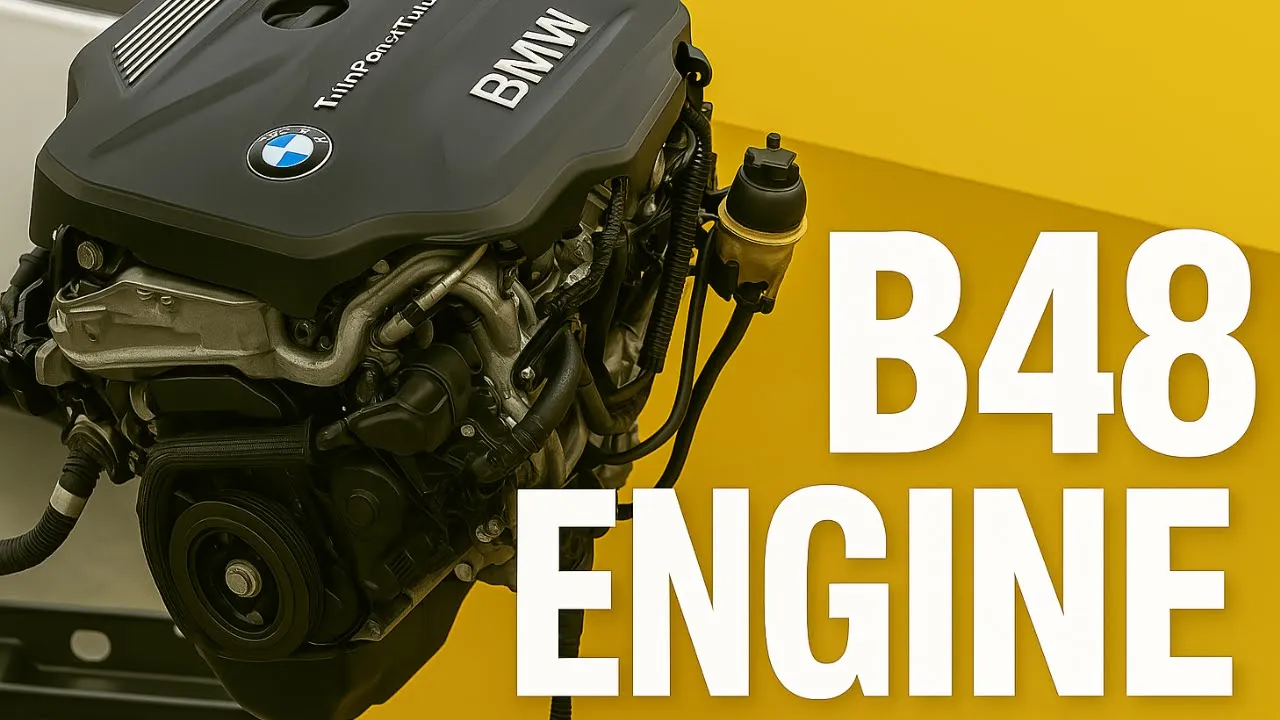
CarsBMW B48 Engine Guide: Specs, Reliability, and Issues
Everything you need to know about BMW’s B48 engine, including specs, common problems, reliability, tuning potential, and used-buying advice.
10 min read Cars
CarsVW EA888 Carbon Buildup: What Owners Need to Know
Learn why VW EA888 carbon buildup happens, the symptoms to watch for, when walnut blasting makes sense, and why it is not a fixed service for every owner.
10 min read Cars
CarsAudi 2.5 TFSI DAZA Engine Guide: Specs, Reliability, Tuning
Everything you need to know about the Audi 2.5 TFSI DAZA engine, including specs, reliability, common issues, tuning potential, and buyer tips.
11 min read