BMW B48 Engine Guide: Specs, Reliability, and Issues
There’s a full video walkthrough for this topic—hit play when you’re ready, or scroll on for the written guide.
Open in YouTube · If the player does not load, your browser or region may block embedded video—use the link.
Everything you need to know about BMW’s B48 engine, including specs, common problems, reliability, tuning potential, and used-buying advice.
If you are shopping for a BMW 230i, 330i, 430i, X1, X3, or a modern MINI Cooper S, there is a good chance the engine you are really researching is the BMW B48. It is BMW Group’s widely used 2.0-liter turbocharged four-cylinder engine, and over the last several years it has become one of the company’s most important modern powerplants.
For many buyers, the key question is simple: is the BMW B48 a good engine? In most cases, yes. It offers a strong balance of performance, fuel efficiency, tuning potential, and day-to-day drivability. It also has a better reputation than some older BMW turbo four-cylinders. That said, it is still a modern direct-injection turbo engine, so long-term ownership depends heavily on maintenance history and how well age-related cooling and oil-system issues have been handled.
This guide breaks down what the B48 is, which cars use it, how reliable it is, the most common BMW B48 engine problems, and what to look for before buying a used BMW with one. Where specifications vary by region, emissions variant, and model year, that is noted clearly.
What Is the BMW B48 Engine?
The BMW B48 is a turbocharged inline-four gasoline engine from BMW’s modular engine family. BMW’s modular approach uses roughly 500cc per cylinder across related three-cylinder, four-cylinder, and six-cylinder engines, which is why the B48 is often discussed alongside the B38 and B58. BMW has described this modular engine concept in its official technical and press material, and the 3 Series press information from the mid-2010s noted that the model range moved to the newly developed modular BMW EfficientDynamics engine family. BMW Group PressClub
In mainstream form, the B48 is a 1,998cc 2.0-liter engine with an aluminum block, aluminum head, direct injection, a single twin-scroll turbocharger, Double VANOS variable cam timing, and Valvetronic variable valve lift. The B48 has been used in multiple output levels depending on tune, vehicle class, and emissions requirements.
In North America, the closely related B46 is the emissions-focused variant used in many applications. BMW enthusiasts often discuss B46 and B48 ownership together because their real-world maintenance patterns are very similar, even though the exact hardware and emissions equipment can differ by market.
BMW B48 Engine Specs
The exact numbers depend on the vehicle, but the core B48 formula stays broadly the same.
- Configuration: 2.0-liter turbocharged inline-four
- Displacement: 1,998cc
- Fuel system: direct injection
- Induction: single twin-scroll turbocharger
- Valve control: Double VANOS and Valvetronic
- Construction: aluminum block and aluminum head
- Timing drive: chain-driven cams
Current BMW USA figures for the 2026 BMW 330i list the 2.0-liter BMW TwinPower Turbo inline-four at 255 horsepower and 295 lb-ft of torque. BMW USA
BMW has also continued evolving this engine family over time. Technical information published around the B46TU/B48TU update describes changes such as a reinforced crankshaft, revised pistons and connecting rods, a larger turbocharger, and increased injection pressure. That matters because when people talk about “the B48,” they are often talking about an engine family that has been refined over several production phases rather than one completely fixed spec.
Which Cars Use the BMW B48?
The B48 has appeared in a wide range of BMW Group products. Common examples include:
- BMW 230i
- BMW 330i
- BMW 430i
- BMW 530i
- BMW X1, X2, X3, and X4 in certain trims
- MINI Cooper S models with the 2.0-liter four-cylinder
- Toyota GR Supra 2.0 in relevant model years and markets
BMW’s official product pages confirm that the current 330i uses a 2.0-liter turbo inline-four, while MINI states that the modern Cooper S uses a 2.0-liter four-cylinder in North America. BMW USA BMW Group PressClub USA
Toyota also lists the GR Supra 2.0 with 255 horsepower and 295 lb-ft of torque, which aligns with the BMW-sourced 2.0-liter turbo setup used in that application. Toyota Pressroom
Because the B48 is so widely used, it is now much easier to find owner feedback, independent specialist experience, and aftermarket support than it was when the engine first arrived.
B48 vs N20: Is the B48 Better?
For most buyers, the answer is yes. The B48 is generally viewed as the better engine compared with the older N20, especially from a long-term confidence standpoint.
The N20 developed a reputation for timing-chain concerns and broader owner anxiety about durability. The B48 arrived as part of BMW’s newer modular engine strategy, and in the years since, it has built a more reassuring reputation overall. That does not make it bulletproof, but it does mean many BMW shoppers see it as the more sensible four-cylinder to own.
In practical terms, the B48 feels like a more mature engine. It delivers strong low-end and midrange torque, smoother refinement, and broad real-world usability. It also benefits from later updates and better-known service patterns, which is important if you are buying used.
Is the BMW B48 Reliable?
The BMW B48 is generally reliable for a modern turbocharged direct-injection engine, especially when compared with the reputation of some older BMW turbo fours. That is the short version.
The longer version is that the engine itself is usually not the main reason owners become unhappy. As mileage climbs, the story often becomes one of surrounding components: plastic cooling parts, oil-filter-housing failures, occasional leaks, and the usual complexity that comes with a tightly packaged turbocharged BMW engine bay.
This distinction matters. There is a big difference between an engine family with a weak core design and an engine family that is fundamentally solid but let down by age-sensitive supporting components. In the case of the B48, the second description is usually closer to reality.
That is also why service history matters so much. A well-kept B48 with frequent oil changes, cooling-system attention, and documented repairs is a very different ownership prospect from a neglected one with vague maintenance records.
Common BMW B48 Engine Problems
Coolant vent line problems
One of the clearest documented issues affecting B46/B48 applications is the coolant vent line on the cylinder head. BMW issued Service Information Bulletin SIB 17 01 21, which states that the quick-disconnect coupling on the coolant vent line could break and cause coolant loss. BMW’s bulletin attributes the problem to excessive high temperatures over the part’s service life. NHTSA bulletin archive
This is a meaningful issue because modern turbocharged engines do not tolerate coolant loss well. If you are buying a used B48-powered BMW, it is worth checking whether this service action was completed and whether any related cooling parts have already been replaced.
Oil filter housing failure
Another commonly discussed weak point is the oil filter housing, especially in plastic-housing applications. In real ownership, this can lead to leaks or outright failure, and it comes up often enough in BMW communities that it belongs on any used-buyer checklist.
It is not accurate to say every B48 will have this problem early, but it is accurate to say that many owners and independent BMW specialists treat it as a known watch item.
Water pump and cooling-system wear
Like many modern BMWs, B48-powered cars can eventually need water pump or broader cooling-system work. This does not necessarily mean the engine is badly designed. It means that the usual BMW cooling-system reality still applies: heat, plastics, seals, and time all matter.
If you are looking at a higher-mileage car, a cooling-system service history is a major plus. If there is no record of any cooling work on an older example, budget cautiously.
Valve cover gasket and oil leaks
As B48 cars age, gasket leaks become more common, especially around the valve cover area. This is not unusual for a turbocharged engine once mileage rises, but it is still something buyers should inspect closely. Oil smells, residue around the top of the engine, or signs of neglected seepage deserve attention during a pre-purchase inspection.
Carbon buildup
Because the B48 uses direct injection, intake-valve carbon buildup remains a possible long-term issue, as it does with many direct-injection engines. The severity varies widely depending on driving style, fuel quality, mileage, and maintenance patterns. It is something to know about, but not a reason by itself to avoid the engine.
Is the B48 Expensive to Maintain?
The B48 is usually more affordable to own than a more complex BMW six-cylinder, but it is still a BMW turbo engine. Maintenance and repair costs will normally be higher than what you would expect from a simpler mainstream naturally aspirated four-cylinder.
Ownership costs are heavily influenced by three things:
- Service history
- Whether common weak points have already been addressed
- Whether the car was modified or driven hard without proper maintenance
If you buy a clean, stock example with records and stay ahead of preventive maintenance, the B48 can be very manageable. If you buy the cheapest one available and hope for the best, costs can pile up quickly.
Is the BMW B48 Good for Tuning?
Yes, the B48 has a strong reputation for being tune-friendly. It responds well to software tuning, and many owners choose it because it offers a meaningful performance bump without stepping up to a six-cylinder BMW.
That said, tuning always changes the risk profile. More boost and more heat place extra demand on cooling, ignition, fuel quality, and oil service intervals. A lightly tuned, well-maintained B48 can be a very enjoyable setup. A poorly tuned one with deferred maintenance is exactly the sort of used BMW many buyers should avoid.
If you are considering a modified B48, ask about:
- The tuning platform used
- Fuel requirements
- Oil change frequency
- Cooling-system maintenance
- Whether downpipes, intake changes, or turbo upgrades were installed
What to Check Before Buying a Used BMW With a B48
If you are shopping for a B48-powered BMW or MINI, these are the smart areas to focus on:
- Cooling-system history, especially vent-line and water-pump work
- Oil filter housing condition and any replacement records
- Oil leaks around the valve cover and nearby seals
- Cold start behavior, idle quality, and warning lights
- Oil change intervals and overall service documentation
- Signs of tuning or undocumented modifications
- Pre-purchase inspection by a BMW specialist
A documented maintenance file is more important than a polished listing description. On engines like the B48, paperwork matters.
Who Should Buy a BMW With the B48 Engine?
The B48 makes sense for buyers who want:
- A modern BMW with strong everyday torque
- Better fuel economy than a six-cylinder model
- A more confidence-inspiring four-cylinder than the old N20
- Solid tuning potential without jumping into higher running costs
- A good balance of performance and daily usability
For many drivers, that is exactly why the B48 has become such a successful engine. It fits the real-world sweet spot. It is quick enough to feel premium, efficient enough for daily use, and common enough that both independent shops and owners now understand its patterns well.
Final Verdict
The BMW B48 engine is one of BMW’s better modern four-cylinder turbo engines. It is not perfect, and it is not an engine you should buy blindly. But taken as a whole, it is a strong package. It delivers good performance, broad model availability, real aftermarket support, and a better ownership reputation than older BMW turbo fours.
The biggest caution is that long-term ownership is often shaped by supporting components rather than catastrophic engine-core failure. Cooling-system plastics, vent-line issues, oil-filter-housing failures, and normal age-related leaks are the areas to watch most closely. BMW’s own service bulletin history supports that cooling-related vigilance is justified. NHTSA bulletin archive
If you buy a well-maintained example, verify the common weak points, and keep up with service, the B48 is usually a smart engine to own.
FAQ
Is the BMW B48 engine reliable?
Generally, yes. The B48 is widely viewed as a reliable modern BMW turbo four, especially compared with the older N20. Its main issues are usually cooling-system parts, oil filter housing failures, and age-related leaks rather than a deeply flawed core engine design.
What is the most common BMW B48 problem?
The most clearly documented issue is the coolant vent line covered by BMW Service Information Bulletin SIB 17 01 21. In owner circles, oil filter housing failures are also one of the most commonly discussed trouble spots. NHTSA bulletin archive
Is the B48 better than the N20?
For most buyers, yes. The B48 is generally seen as the more confidence-inspiring engine with a better long-term reputation.
Can you tune a BMW B48?
Yes. The B48 responds well to tuning, but a tuned car should be evaluated more carefully because extra boost and heat increase stress on supporting parts.
Which BMWs have the B48 engine?
Common examples include the BMW 230i, 330i, 430i, 530i, and several X-Series models, plus related MINI Cooper S applications. Exact availability depends on market, trim, and model year.
Related articles
 Cars
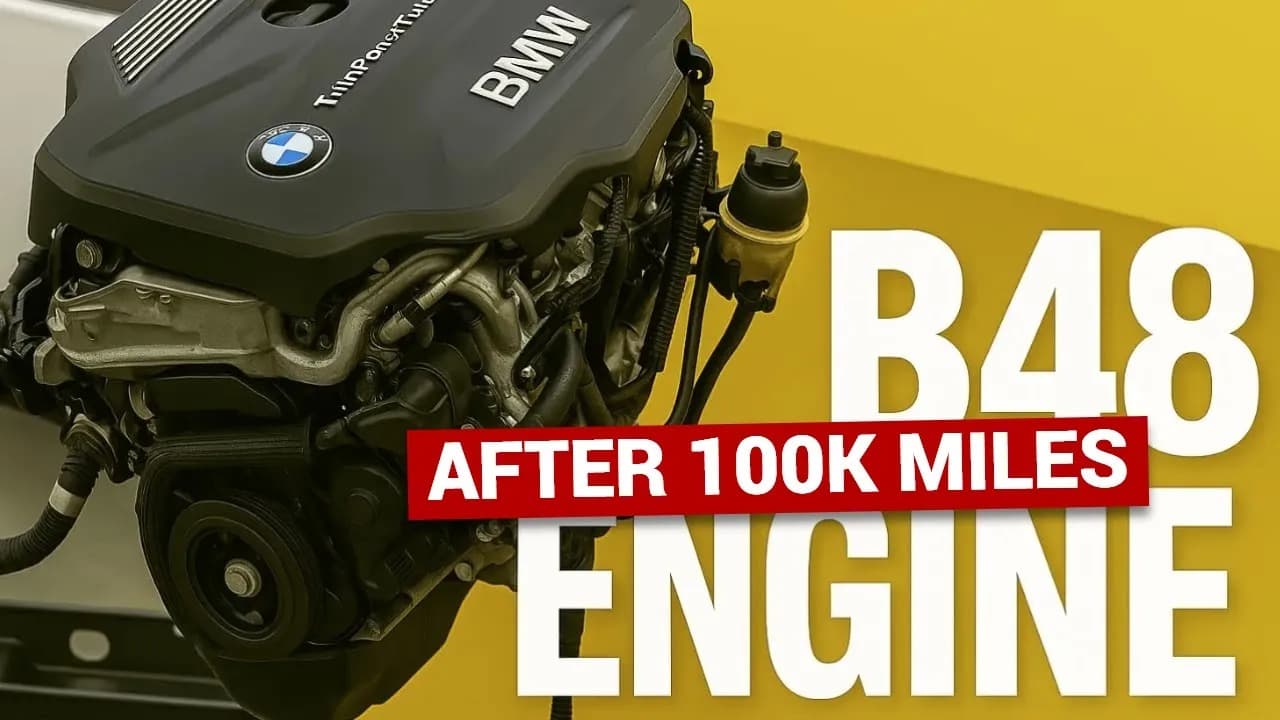
CarsBMW B48 After 100K Miles: Still Reliable or a Risk?
Wondering whether the BMW B48 engine is reliable after 100K miles? Here’s what owners should expect, which problems matter most, and when to buy or walk away.
11 min read Cars
CarsVW EA888 Carbon Buildup: What Owners Need to Know
Learn why VW EA888 carbon buildup happens, the symptoms to watch for, when walnut blasting makes sense, and why it is not a fixed service for every owner.
10 min read Cars
CarsAudi 2.5 TFSI DAZA Engine Guide: Specs, Reliability, Tuning
Everything you need to know about the Audi 2.5 TFSI DAZA engine, including specs, reliability, common issues, tuning potential, and buyer tips.
11 min read